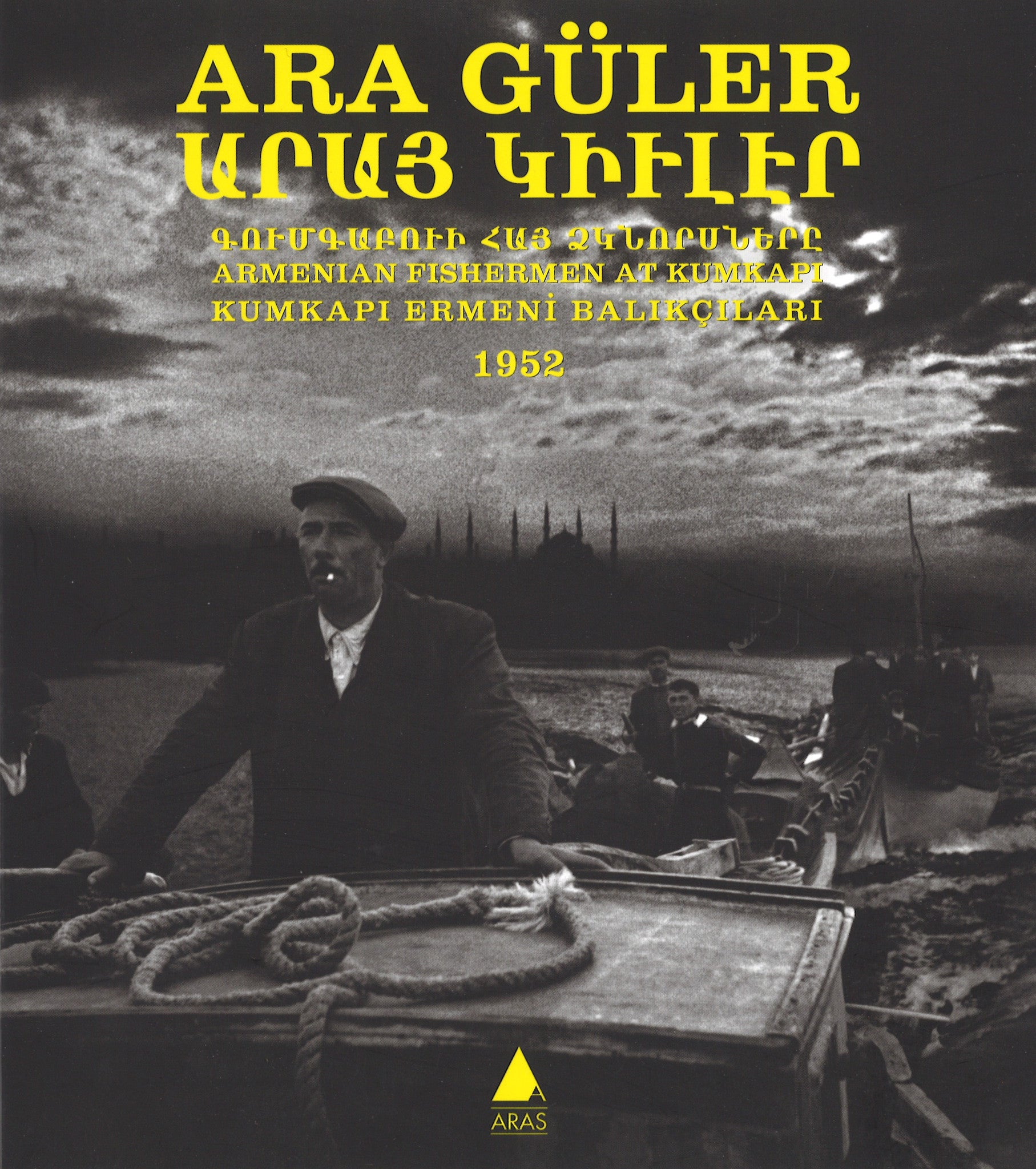
Armenian Fishermen at Kumkapı by Ara Güler
***
Here’s a detailed review of the book Armenian Fishermen at Kumkapı, by Ara Güler, covering its background, content, strengths, weaknesses, and what makes it of interest.
***
1. Background & Context
-
The book reproduces a photo-journalistic series Güler published in the Armenian-language newspaper Jamanak from 21–26 May 1952. (NAASR)
-
At the time Güler was 24 years old, and this project marked a significant early milestone in his career — helping establish his reputation in photo-journalism. (Daily Sabah)
-
The subject matter is the fishermen community (specifically Armenian fishermen) of the Kumkapı district of Istanbul, during a period just prior to major urban changes (the coastal road / “Sahil Yolu” etc) that transformed the area.
-
The book is trilingual (Turkish, English, Armenian) and includes both the original text and translations; plus archival photographs (56 total) beyond the original 12 published in the newspaper. (NAASR)
2. Content & Structure
-
You’ll find a mixture of photographs and text (photo-interview style), depicting everyday life of the fishermen community: the captains (“reis”), the crews, the net-menders (including women), market scenes, boats, harbor life, etc. For example: the book mentions “İstanbul’un son Ermeni balıkçı reisleri, Dacat Reis, Husig Reis, Kevork Reis; ağ onaran merametçi kadınlar” etc.
-
Visually, the photographs are black & white (mostly), capturing a moment in time in a neighbourhood that was soon to be much changed. A key purpose is archival: to preserve a “way of life” that has disappeared.
-
The text provides not only descriptive captions but also interviews or narrative snippets: Güler himself writes in the intro about rediscovering the work decades later, reflecting on how time erases memory. (arasyayincilik.com)
3. Why It Works – Strengths
-
Historical value: The book documents a neighbourhood, a culture, and a community that is no longer intact or has been significantly altered. It’s a rich visual archive of mid-20th-century Istanbul.
-
Emotional/atmospheric quality: Güler’s photography is often praised for capturing the “feeling” of the city — the textures, light, human presence. For example, an article refers to “weathered faces of Armenian fishermen from Istanbul’s Kumkapı neighborhood (circa 1950’s)”. (iias.asia)
-
Multilingual and accessible: The trilingual format makes it accessible to Armenian, Turkish, English readers, thereby broadening its reach.
-
Visual storytelling + sociology: It’s not just pretty images — the combination of photos and text gives insight into labor, ethnicity, community, change over time. For example, the Medium piece reflects on otherisation, gentrification in the context of the book. (Medium)
-
Early landmark work: For those interested in Güler’s oeuvre, it's a meaningful early piece showing his foundational interest in Istanbul and its people.
4. Limitations / Considerations
-
Scope: While rich, the book is relatively compact — 56 photographs plus text. So it doesn’t cover exhaustive context of Istanbul’s fishing industry or the full history of Kumkapı’s transformation across decades.
-
Language / translation issues: Even though multilingual, some nuance may be lost in translation; the original Armenian text may have particular cultural or linguistic shades that are harder to render.
-
Condition / availability: Some original colour film deteriorated (per archival note), meaning some images may only survive in black & white or reduced quality. (Türkiye Today)
-
Audience: It is perhaps more appealing to readers with interest in photography, Istanbul urban history, or ethnic minority studies — less so for a purely casual coffee-table browsing unless one is drawn to historical photo-books.
5. Significance & Why You Might Want It
-
If you appreciate culturally rich, historically layered imagery (as I recall you do: you like vibrant, culturally rich artwork), then this book fits well: it offers not only aesthetic depth but cultural heritage.
-
For photography aficionados or those studying mid-20th-century Istanbul, it’s a reference piece: you’ll see the later-demolished streets of Kumkapı, the Armenian fishing community, and gain a window into a vanished urban fabric.
-
If you’re researching community change, urban heritage, minority groups in Istanbul, or the work of Ara Güler, this is a meaningful piece.
-
As an art object: the physical book, with good printing, photographs and bilingual text, can serve as a striking piece for your collection or display.
6. My Verdict
I would rate the book highly — 4.5 out of 5 for its niche, but rich contribution.
If I were to summaries:
-
Its biggest asset is the authenticity of view: raw, human, evocative photography combined with reflective text.
-
Its smallest shortcoming is its limited breadth (i.e., it doesn’t cover entire industry or later decades of change in depth) and the availability/print-quality issues for some archival photos.
-
If I were advising you: make sure you get a good condition copy (since archival photo-books sometimes suffer with wear) and check the printing quality of the images.
Great — here are sample high-resolution image links and purchase options for Armenian Fishermen at Kumkapı by Ara Güler.
✅ Sample Images

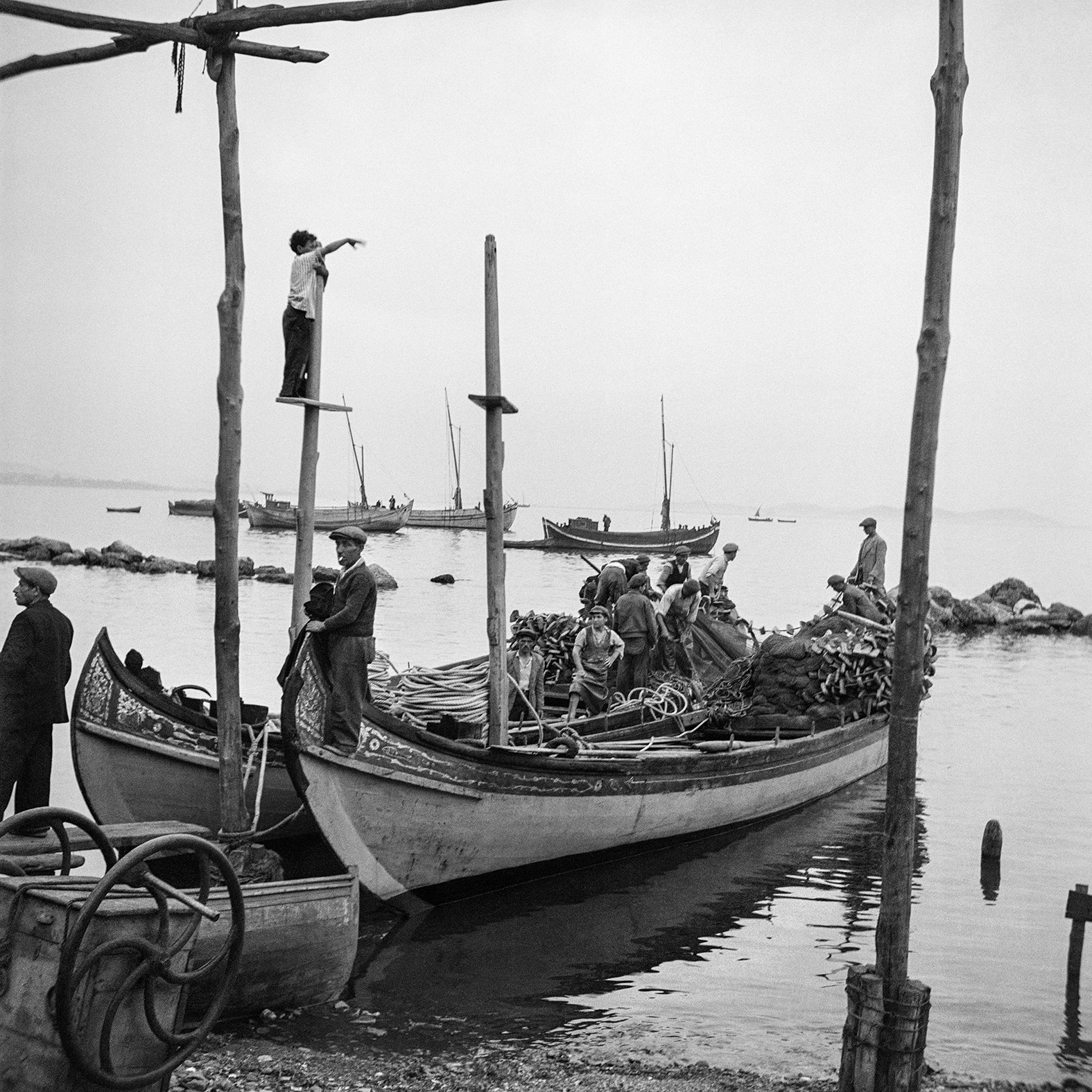
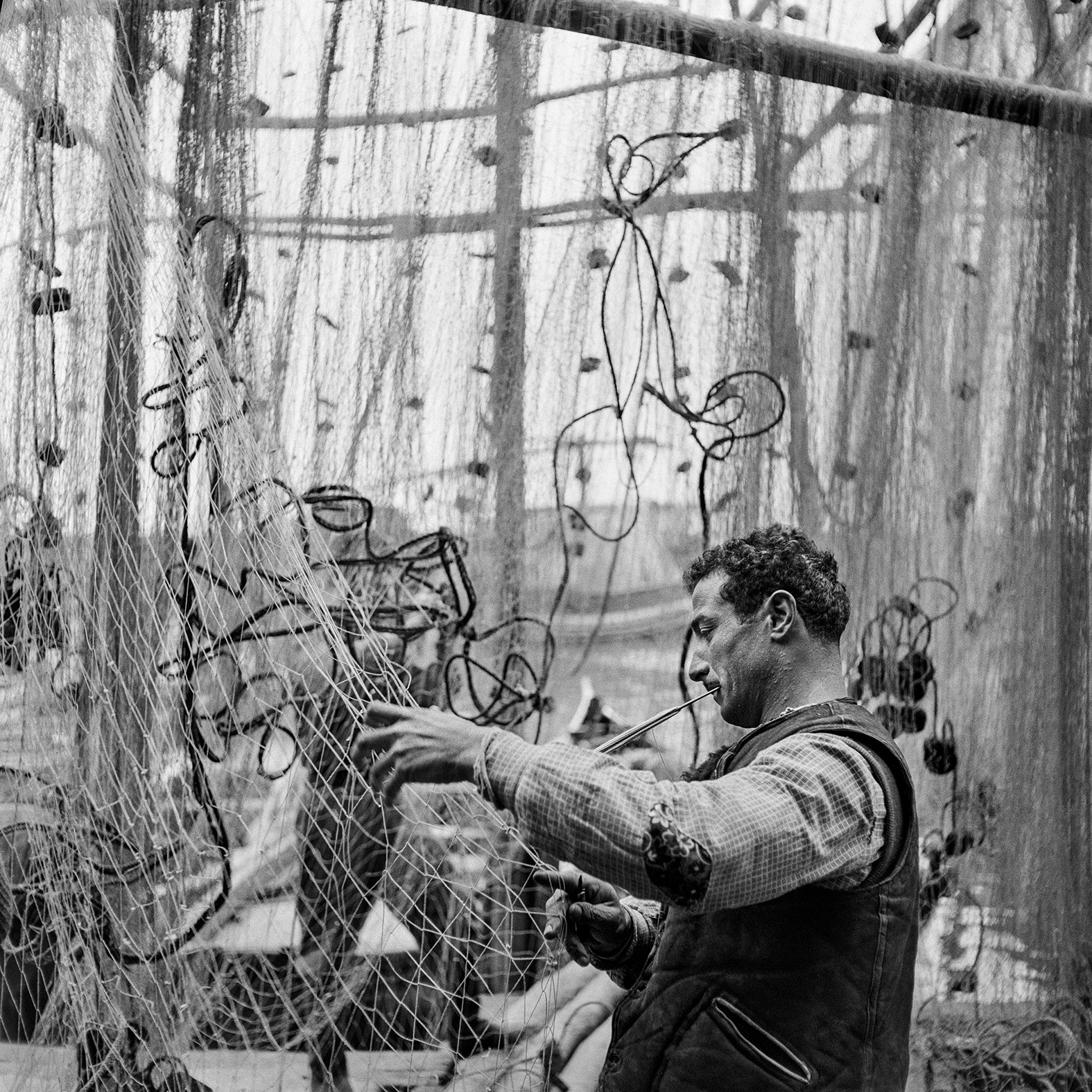
These give a good sense of the photography style and historical atmosphere in the book.
🛒 Purchase Options
Here are some places where you can buy (or keep an eye out for) the book:
-
From the publisher/official distributor: The listing on NAASR (North American Armenian Society) shows the book for sale as “ARA GÜLER: ARMENIAN FISHERMEN AT KUMKAPI” at USD $55. (NAASR)
-
Listing via Turkish bookstore: The edition titled “Kumkapı Ermeni Balıkçıları – Armenian Fishermen at Kumkapı” (2016 edition, 22×25 cm, 127/128 pages, trilingual Turkish-Armenian-English) with ISBN 9786055753191. (Simurg Kitabevi)
-
Rare book listings: On sites like AbeBooks you’ll find this edition (2010/2016) listed, sometimes for significantly higher prices due to scarcity. (AbeBooks)
🔍 Tips for Getting a “Good Edition”
-
Check the ISBN: The edition with ISBN 9786055753191 corresponds to the trilingual (Turkish-Armenian-English) reprint.
-
Page count & dimensions: Aim for ~127 pages, ~22×25 cm size.
-
Cover & condition: Since this is a photographic book, condition matters (image quality, no discoloration).
-
New vs used: New copies are limited and some listings show high prices — if buying used, check photo condition and completeness.
-
Shipping/import concerns: If ordering from Turkey or abroad, check shipping costs/time.
If you like, I can scan for a “signed” or limited-edition version of the book (sometimes collectors’ editions exist) and check for best current pricing in the U.S./Canada market. Would you like that?


Comments
Post a Comment